
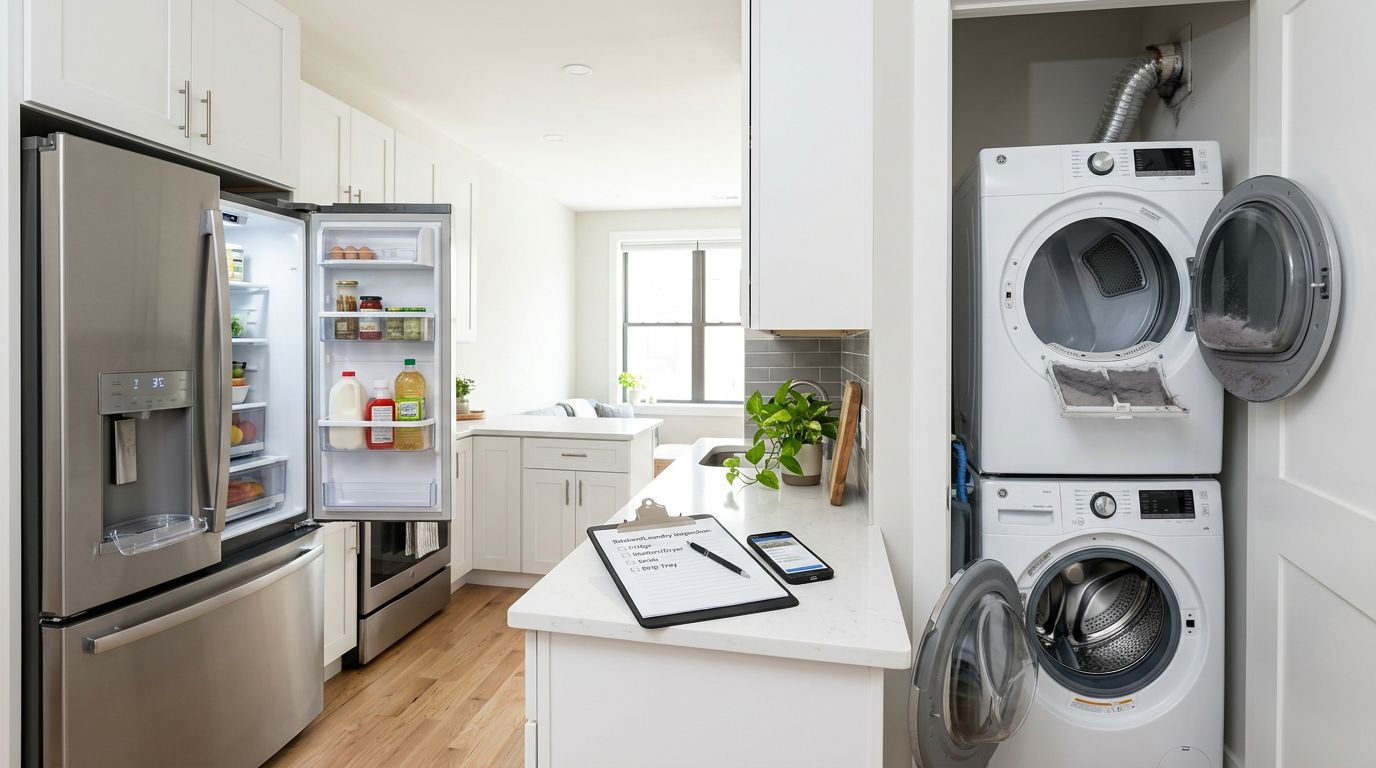
Apartment Appliance Inspection Tips for Philadelphia Renters

A bright kitchen can hide a refrigerator that barely cools. A polished laundry closet can hide a dryer with a blocked vent. Before you sign a lease, conducting a thorough apartment appliance inspection is a vital part of a broader apartment inspection, as it gives you a clearer picture of what daily life in the unit will feel like.
Philadelphia rentals range from renovated rowhomes to new mid-rise buildings, and appliance condition varies widely. Remember that the landlord is responsible for providing functional appliances in Philadelphia rentals. Use your showing time to test what you can, ask direct questions, and document anything that needs attention before move-in.
Key Takeaways
Test every included appliance during your apartment inspection, even if the unit appears clean or brand new.
Check for leaks, strange noises, weak airflow, loose controls, and missing parts.
Take dated photos and videos of any existing issues before signing the lease or accepting your keys.
Ask the property manager which appliances are included and clarify the process for submitting maintenance requests before you sign.
Put agreed repairs in writing, especially if they affect essential services like heat, water, cooking, or laundry.
Bring a Simple Inspection Kit to the Showing
Most apartment tours move quickly, so arrive prepared. Your phone is the most useful tool. It provides a camera for your visual inspection, a flashlight, a timer, a notes app, and even an outlet tester if you bring a small plug-in model.
Bring a phone charger as well. Plugging it into outlets around the kitchen, bedroom, and bathroom can reveal dead or loose receptacles. A few paper towels also help you check under sinks and around appliance connections for moisture.
Ask before running a full dishwasher or laundry cycle. However, local property management should be comfortable demonstrating how major appliances operate. If they cannot turn on the oven, refrigerator, heat, or water, ask for a follow-up appointment before you commit.
Start a note labeled with the apartment address and unit number. Record appliance brands, model numbers, visible issues, and every promise made during the tour. A detailed Philadelphia move-in inspection checklist can help you document the entire unit, not only the appliances.
A repair promise made during a rushed tour is easy to forget. A dated email is much harder to dispute.
Check Kitchen Appliances Before Signing a Lease
The kitchen gets the most daily use, so do not limit your visit to opening cabinets and admiring the counters. Conducting a thorough kitchen evaluation is a high-priority part of your apartment inspection, as small defects can turn into daily hassles after you move in.
Inspect the Refrigerator and Freezer
Open both doors and look at the rubber gaskets around their edges. The seals should sit flat, without splits, grime, or gaps. A worn gasket lets cold air escape, which can cause constant cycling, poor cooling, and higher electric use.
The refrigerator interior should feel cold, while the freezer should feel fully frozen. Watch for heavy ice buildup, puddles, condensation near the seal, cracked shelves, or a stale odor. Also, listen for persistent clicking, grinding, or an unusually loud hum.
Check that the interior light works and drawers slide smoothly. If the unit has an ice maker or water dispenser, ask for a demonstration. Do not assume those features work just because they are installed.
Test the Stove, Oven, and Hood
Turn on every burner on the stove. Electric coils should heat evenly, while gas burners should ignite promptly with a steady blue flame. Yellow or orange flames can point to a combustion issue, so flag them right away.
Open the oven door and inspect the racks, door seal, and interior light. Set the appliance to a low temperature if the showing allows it. Then, ask whether the broiler works and whether the unit has had recent repairs.
Do not overlook the range hood. Switch on its fan and light. Hold a tissue near the hood to see whether it pulls air upward. A hood that only makes noise without moving air will not do much for cooking smoke or moisture.
A broader apartment inspection guide from Rent.com also recommends looking for damage around electrical fixtures and testing basic features before move-in.
Run the Dishwasher if Possible
A dishwasher can look spotless and still drain poorly. Open it and inspect the racks, utensil basket, spray arms, and door gasket. Broken rack tines and a loose seal may seem minor, but they can lead to damaged dishes and leaking water.
Remove the lower rack if possible and look for debris in the filter area. Then, ask to run a brief cycle. Listen for water entering, the spray arms moving, and the machine draining at the end.
Check the floor beneath and beside the dishwasher for warped wood, stained vinyl, or a musty smell. Those signs may point to an older leak. Water damage near any appliance deserves a written repair request before you sign.
Inspect Laundry, Plumbing, and Water Fixtures
In-unit laundry is convenient, but it deserves more than a quick glance. The same goes for kitchen and bathroom plumbing. Water moves fast when something fails, and Philadelphia's older buildings can have hidden pipe issues.
Test the Washer and Dryer
Open the washer door or lid and look for mold and mildew around the gasket, rust inside the drum, or a strong musty smell. Test the controls and make sure the machine appears level. A washer that rocks noticeably can become loud and damaging during a spin cycle.
If management permits it, run a short cycle. The washer should fill, agitate, drain, and spin without violent shaking or scraping sounds. Check the hoses behind it for cracks or corrosion.
Turn on the dryer and confirm that it heats. Ask whether the building cleans the dryer vent, especially in a stacked unit or interior laundry closet. Lint buildup in a dryer vent is a fire risk, not a cosmetic concern.
For shared laundry rooms, inspect several machines rather than only the closest one. Check card readers or app-based payment systems, posted hours, and whether residents have access to enough machines for the building size.
Check Faucets, Drains, and Hot Water
Run cold and hot water at the kitchen sink, bathroom sink, shower, and tub. These plumbing fixtures should show water flowing at a usable pressure and warming up within a reasonable time. Let the hot water run for a few minutes to confirm the water heater provides a stable, consistent temperature.
Look under sinks with your phone flashlight. Damp cabinet bottoms, swollen particleboard, rusted shutoff valves, or white mineral buildup around pipes can reveal a long-running leak.
Flush the toilet twice. It should refill without hissing or running after the tank fills. In the shower, switch between the tub spout and showerhead, then look for drips from the faucet handles or water pooling around the tub.
A loose cabinet hinge may be annoying. A ceiling stain beneath a bathroom or laundry area is more serious. Photograph it and ask what caused it.
Test Heat, Air Conditioning, and Electrical Safety
While appliances are essential for a comfortable home, a functioning HVAC system and reliable electrical systems are critical to ensure the unit is safe to live in. Test these components during your showing, even if the current weather makes testing one mode seem unnecessary.
Set the thermostat a few degrees above or below the current room temperature. You should hear the system respond immediately, and air should begin moving through the vents. In a building with radiator heat, ask the landlord how temperature is controlled and verify that each radiator has working valves.
Philadelphia regulations require that a landlord must maintain a habitable home that is safe for normal living. Issues such as a complete loss of heat, lack of hot water, major leaks, broken locks, or missing smoke detectors are significant concerns that go beyond routine maintenance. If you discover a serious problem during your inspection, do not accept a vague assurance that it will be fixed later.
Evaluate the electrical systems by testing outlets with a phone charger or a dedicated outlet tester. Outlets should hold a plug firmly and must not feel warm to the touch, buzz, spark, or move within the wall. Flip every visible light switch in the unit, including those in closets, over the stove, and near exterior doors, to ensure they function properly.
Finally, press the test button on all smoke detectors and carbon monoxide detectors. Carbon monoxide protection is vital if the home features gas appliances, a furnace, or an attached garage. Request that the property manager replace batteries or units immediately if any device fails to signal during your test.
Put Appliance Repairs and Responsibilities in Writing
A clean paper trail protects you if the fridge fails during your first week or a dishwasher leak damages your belongings. Before signing your lease agreement, compare the actual unit with the appliance list provided in the listing or any addendums. Documenting the condition of these items, even for minor repairs, is essential to protect your security deposit later on.
Confirm whether the refrigerator, stove, dishwasher, microwave, washer, dryer, window AC unit, and garbage disposal come with the apartment. If an appliance is included, ask whether the property management team or the landlord handles repair requests and how to report an emergency after business hours. Always ensure that the landlord or maintenance staff respects tenant privacy by providing the required notice period before entering your home for non-emergency work.
Send a concise email after the tour if repairs were discussed. Include the unit number, the specific appliance, its visible condition, and the repair promised. For example: "During today's tour, the dishwasher did not drain and the bathroom exhaust fan did not operate. Please confirm both repairs will be completed before move-in."
Photos matter, but written descriptions add context. Take wide shots that show where the appliance sits, then close-ups of dents, leaks, broken handles, or error codes. Keep screenshots of portal requests, emails, and manager replies in one folder.
If a safety issue develops after you move in, report it through every contact method named in your lease. Do not attempt electrical, gas, or major plumbing repairs yourself, as unauthorized alterations could be considered lease violations. For urgent conditions involving fire, gas smells, flooding, or electrical danger, contact emergency services first.
Frequently Asked Questions
Should I Test Appliances During an Apartment Tour?
Yes, within reason. As part of your thorough apartment inspection, you should turn on burners, faucets, lights, the range hood, and HVAC controls. Always ask permission before running a dishwasher or laundry cycle. A property manager should be willing to demonstrate that all included appliances are in working order.
Can I Ask for Appliance Repairs Before Signing?
Yes. Ask for any necessary repairs in writing and request confirmation once they are complete. If the issue is substantial, such as a non-working refrigerator, no heat, or an active leak, verify the repair yourself before accepting the keys.
Who Repairs a Broken Appliance After Move-In?
Your lease agreement should clearly define maintenance responsibility. In most Philadelphia rentals, the landlord handles appliances supplied with the unit unless damage was caused by the tenant. Report issues promptly to your management team and keep detailed records of every maintenance request you submit.
What Appliance Problems Should Make Me Walk Away?
Active leaks, exposed wiring, gas odors, missing smoke detectors, no reliable heat or hot water, and obvious mold or pest activity are serious warning signs. A property owner who dismisses these conditions during your walkthrough is another major red flag that you should consider before committing to the unit.
Conclusion
A thorough apartment inspection takes less time than dealing with a broken refrigerator or a leaking washer after move-in. Beyond just looking at surface-level aesthetics, you should use your walkthrough to identify potential safety hazards and verify the structural integrity of the unit. Test all equipment, check for water and electrical warning signs, and always keep a written record of any promised repairs.
The strongest protection is clear documentation before you get the keys. A few careful minutes during the showing can prevent months of maintenance disputes and ensure your rights as a tenant are fully protected.


Comments