
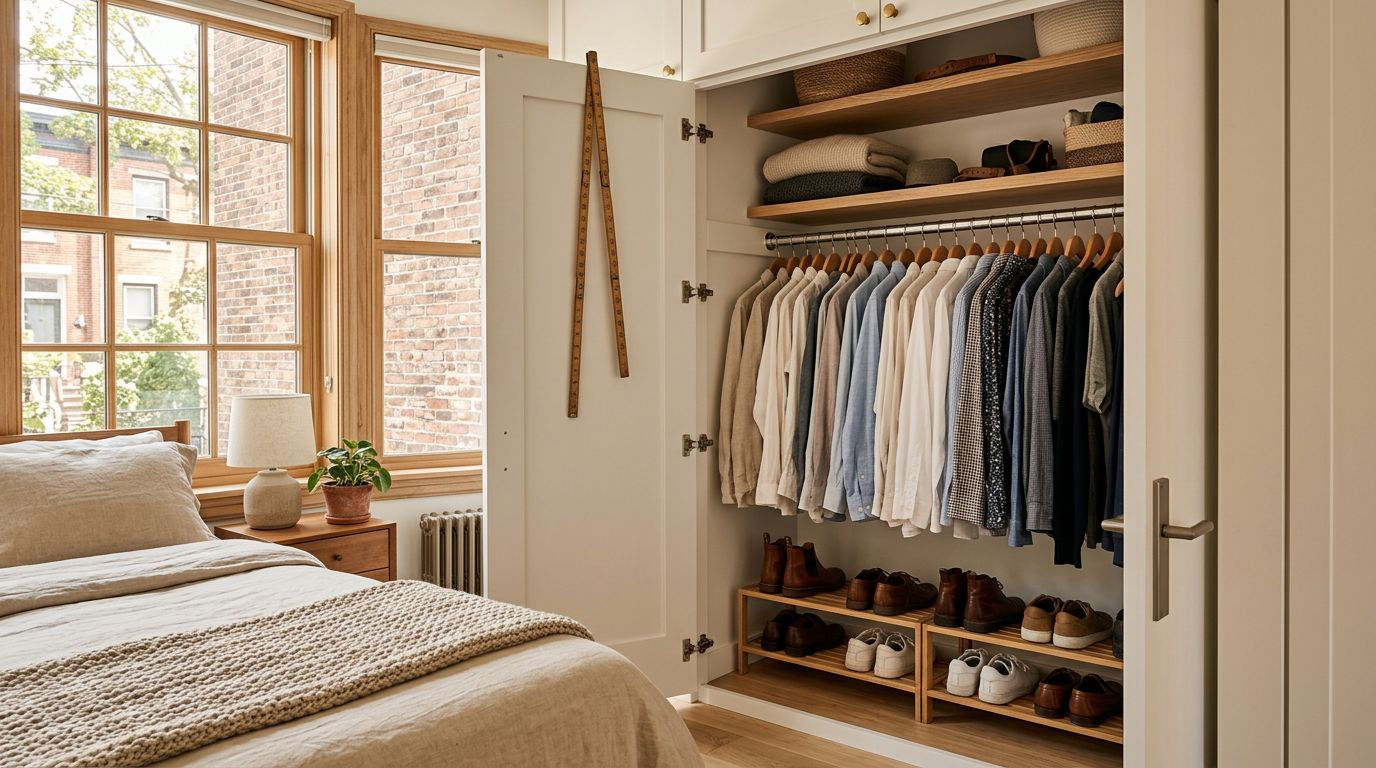
Closet Space Checklist for Philadelphia Rentals

A great apartment can still feel cramped if the closets barely hold a week's worth of clothes. In Philadelphia PA, that happens more often than people expect, especially in older rowhomes, converted buildings, and units where the photos make storage look larger than it is.
Before you sign, treat closet space like your monthly rent or natural light. When searching through available apartments for rent in the city, checking your storage options early is essential. If you evaluate your potential storage needs during the tour, you can avoid a lease that looks good on paper but turns into a daily pile of coats, shoes, and laundry baskets.
Key Takeaways
Measure first, guess never. A closet can look fine in photos and still fail in real life.
Check the whole storage picture. Closet depth, shelf placement, and door swing matter as much as size.
Look beyond the bedroom closet. Entryways, linen closets, under-bed space, and wall storage can carry a lot of the load.
Ask direct questions on tours. If the listing is vague, get the answers before you apply.
Have a backup plan. If the apartment is tight, renting local storage units or practicing seasonal rotation can keep your living space functional and clutter-free.
Measure The Closet Before You Picture Your Furniture
A closet only works if it fits the things you already own. That sounds obvious, but people often tour an apartment, see a hanging rod, and move on. This is especially risky in high-demand areas like Center City or Rittenhouse Square, where every square foot is at a premium. A closet can still be awkward if the opening is tight, the shelves sit too high, or the door blocks half the room.
Bring a tape measure and check the basics yourself. Width tells you how many hangers can fit side by side. Depth tells you whether coats, dresses, and jackets will clear the door. Height matters too, because a tall closet with poor shelf placement wastes space.
A closet that looks large in a photo can feel tiny once you add hangers, bins, and winter coats.
Use this quick guide during a tour:
Closet Detail | What To Check | Why It Matters |
|---|---|---|
Width | Can you hang your clothes without crowding? | Narrow closets fill up fast. |
Depth | Do hangers sit comfortably behind the door? | Shallow closets waste usable space. |
Door swing | Does the door hit a bed or dresser? | Bad placement reduces access. |
Shelving | Are shelves fixed or adjustable? | Adjustable shelves help you maximize space. |
Floor space | Can you place a hamper or vacuum inside? | Some closets hold only hanging clothes. |
If the apartment includes a coat closet, linen closet, or hallway closet, measure those too. A small extra closet can be more useful than one oversized bedroom closet, especially in a one-bedroom or studio. Prioritizing these storage solutions is key for new residents settling into Philadelphia, PA.
Read The Bedroom Like A Storage Plan
Bedroom storage changes how a rental lives day to day. A walk-in closet gives you breathing room, but a smart reach-in closet can still work if the layout is clean and the room has other storage spots. If you want to compare layouts before touring, a walk-in closet guide is useful because it shows how different apartment types handle storage.
Look at the whole room, not only the closet door. Is there wall space for a tall dresser? Can a bed leave room for under-bed bins? Does a window eat up the only blank wall? Those details matter because they tell you whether the closet has to do all the work. When considering different floor plans, keep in mind that storage expectations vary. For example, studio apartments often require creative vertical solutions, whereas 1 bedroom apartments and 2 bedroom apartments may offer dedicated closets that allow for a more traditional division of your wardrobe.
Older Philadelphia apartments often rely on smaller closets and bigger rooms, while newer units may give you cleaner storage zones. Neither setup is automatically better. The right one depends on how much you own and how you actually live.
If you keep formalwear, sports gear, seasonal bedding, or extra shoes, ask yourself where each category will go. A deep closet with one rod may be less useful than a narrower closet with shelves, drawers, and a second hanging level. Storage that stays organized is storage that gets used, and maintaining well-organized storage is the cornerstone of effective home organization for any renter.
Make Small Spaces Work Without Clutter
Even the smallest closets can become highly functional when you apply smart home organization and space-saving techniques throughout your apartment. That means using the entryway, bed frame, and vertical wall space with intention. A narrow coat rack near the door, a storage bench, and a few sturdy hooks can keep bags and jackets out of the bedroom.
A few simple fixes go a long way:
Under-bed bins keep seasonal clothes and spare linens out of sight.
Over-the-door organizers help with shoes, accessories, and smaller items.
Bed risers create more room for boxes or low drawers.
Wall shelves move folded items upward instead of onto the floor.
Vacuum bags reduce the space taken by comforters and winter coats.
If your stuff still outgrows the apartment, think about your options for external storage units before move-in day gets stressful. Philadelphia has plenty of residential storage facilities with climate control, drive-up access, and longer access hours. That matters for things like extra bedding, work files, or off-season clothes that you do not need every week.
The point is simple. Closet space in Philadelphia rentals is often a puzzle, not a luxury. The goal is to make every square inch useful without turning your home into a warehouse.
Questions To Ask On A Philadelphia Tour
If a listing claims the unit has good storage, ask for clarification. Some landlords define this as a spacious walk-in, while others mean a shallow nook with a single rod and shelf. When you view property layouts, make sure you open every door and ask follow-up questions to understand the reality of the space.
M&M Property Management's Philadelphia apartment tour checklist is a helpful companion when you want a broader set of questions beyond storage. Remember that the storage capacity should be weighed against your 12 month lease commitment and the total monthly price of the unit to ensure you are getting value for your money.
Ask these directly:
Which closets belong to this exact unit?
Can I measure the closets before I sign the lease?
Are shelves adjustable, or are they fixed?
Is there extra storage in the basement, hallway, or laundry area?
Do model-unit closets match the specific unit I would rent?
Can I add organizers, hooks, or a second rod without violating the lease?
Can I hire a professional installation team for custom closets, or does the building offer custom design options for storage?
That last question matters more than many tenants realize. A closet that allows simple upgrades is easier to live with than one that leaves no room for flexibility. If the lease is restrictive, the space can feel smaller than its measurements suggest.
Also check the door hardware. A closet with a broken track, sticky hinge, or poor lighting becomes a major inconvenience. Good storage is not only about square footage; it is about accessibility and how well the space functions for your daily life.
FAQs
How Much Closet Space Is Enough For One Person?
There is no single answer, because wardrobe size varies so much. A light packer can work with one decent bedroom closet and a few other storage spots. Someone with work clothes, winter coats, or athletic gear may need much more.
Is A Walk-In Closet Always Better?
Not always. While walk-in closets are often a top priority for renters, a custom design in a smaller space can often be more efficient. A poorly designed walk-in can waste valuable corners, whereas a smaller closet with high-quality shelving may actually provide better utility in your daily life.
Should I Count Basement Or Hallway Storage?
Yes, but only if it is actually part of the lease and easy to use. Shared storage can help, but it should not replace the closet space you need every day.
What If The Apartment Barely Has Any Closets?
Then price the rest of the storage plan before you sign. Using under-bed bins, wall hooks, or renting external storage units can close the gap, but you should factor these costs into your total monthly price. It is important to budget for these organizational solutions upfront to ensure the apartment remains a viable option for your lifestyle.
Conclusion
Closet space might appear limited in online listings, but it becomes a defining feature of your daily routine once you move in. That is why a thorough tour check is worth more than the most polished marketing photo.
When searching for apartments for rent, prioritizing your storage needs will lead to a much better living experience in Philadelphia PA. Always remember to measure the closets, study the room layout, and ask direct questions about storage options before you sign a lease. Ultimately, adequate closet space in Philadelphia rentals is a critical factor in long-term tenant satisfaction. If the apartment fits your belongings, it fits your life, but if it does not, no amount of clever folding will fix the problem.


Comments