
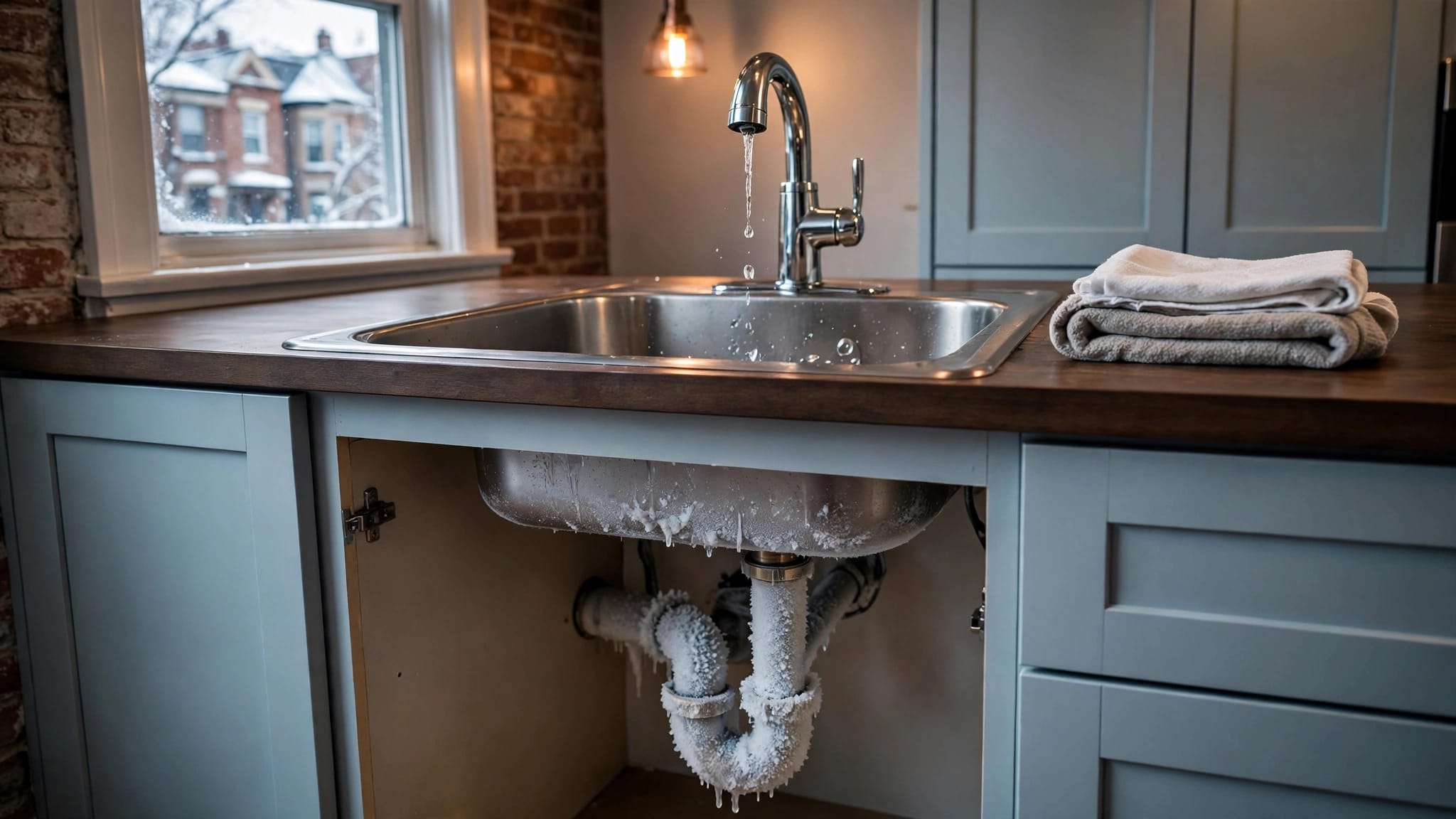
Frozen Pipes in a Philadelphia Apartment: What to Do

This guide covers what to do about frozen pipes Philadelphia renters may encounter during a cold snap. Contact emergency maintenance, leave the affected faucet slightly open, and keep the heat on. If water is leaking, shut off the water at an identified, safely accessible valve and stay away from wet electrical equipment.
Reduced flow can be the first warning, even before a faucet stops working. Your next step depends on whether the problem affects one fixture, your building, or the surrounding block.
Key Takeaways
Contact emergency maintenance immediately, then follow up in writing with the time, affected fixtures, and photos.
Ask neighbors in your building and a nearby building whether they have water.
Warm accessible plumbing gently, only when there's no leak or electrical hazard.
If a pipe bursts, prioritize safe water shutoff and professional repairs.
Call the Philadelphia Water Department at 215-685-6300 for a suspected water main break or leaking meter, rather than an ordinary private plumbing repair.
Is It Frozen Plumbing or a Water Main Break?
A dry faucet doesn't automatically mean a frozen pipe. A building shutoff, plumbing failure, or neighborhood water main break can also interrupt service.
Compare Fixtures and Nearby Buildings
Briefly compare water pressure across fixtures and note whether hot water, cold water, or both are affected. One affected fixture suggests a more localized problem; several affected fixtures can point to a shared supply line.
Then ask neighbors whether their water works. The Philadelphia Water Department's frozen-pipe guidance recommends this comparison to help distinguish private plumbing trouble from a possible main break.
Ask outside your building, too. Several apartments can lose service because of one frozen shared line, even when the rest of the block has water.
Look for Leaks Without Entering Unsafe Areas
From a dry, accessible location, look for dripping, wet walls, or water collecting near exposed plumbing. Listen for running water behind a wall when fixtures are off.
Tell maintenance whether nearby properties still have service. If several buildings have no water, report the suspected public-supply problem to PWD. However, don't assume every neighborhood outage is a main break; the department determines the cause.
How to Thaw Frozen Pipes Safely
Renters shouldn't open walls or dismantle plumbing. Limit your response to accessible areas and stop if you see damage.
Open the Faucet and Warm the Surrounding Area
If there's no leak, leave the affected faucet slightly open. A slow faucet drip gives meltwater somewhere to escape. Keep the apartment's heating system operating, and open the sink cabinet to let warm room air reach the plumbing.
PWD recommends a hair dryer or space heater to warm the area around frozen plumbing. Use gentle warmth, keep electrical equipment dry, and never rest a heater or dryer against a pipe.
An open faucet gives meltwater somewhere to drain. A trickle alone won't thaw a pipe that's already frozen solid.
Stop if water appears around a joint or pipe. Ice can conceal damage until thawing allows water through.
Avoid Fire and Electrical Hazards
Never use a torch, open flame, charcoal burner, or oven to thaw plumbing or heat the apartment.
A portable heater needs open space. The U.S. Fire Administration's heating safety guidance calls for at least 3 feet of clearance from anything that can burn.
Plug a space heater directly into a wall outlet, keep it away from water, and stay nearby while it operates. Don't squeeze one inside a sink cabinet.
If the suspected frozen section is behind a wall, above a ceiling, or in a locked utility area, leave thawing to building maintenance and a qualified professional.
What to Do When a Pipe Bursts
A burst pipe changes the priority immediately. Stop thawing attempts and focus on limiting water flow without exposing yourself to electricity or unstable materials.
Shut Off Water Only Where You Can Safely Reach It
PWD directs residents to the house-side valve near the water meter for damaged private plumbing. This valve is on the building-plumbing side of the meter, rather than the street-supply side.
In an apartment building, the meter and main shutoff may be in a shared or locked utility room. Use an identified, accessible shutoff if you know what it controls. Otherwise, tell emergency maintenance where water is actively escaping and request emergency pipe repair.
Don't force a stuck valve or operate an unidentified valve on a shared system.
Stay Clear of Flooded Electrical Equipment
Never walk into standing water near outlets, appliances, electrical panels, or loose cords. Don't enter a flooded basement or other wet area to reach a valve.
Call 911 if there's an immediate threat such as sparking, fire, or a sagging ceiling that could collapse. Keep people away from the affected area.
If it's safe, move belongings away from the water and take photos. Maintenance should arrange a qualified contractor and prompt drying. Don't restore water after a suspected burst until the damaged plumbing has been addressed.
Report the Emergency and Keep a Written Record
Call the emergency hotline or emergency maintenance number listed in your lease or resident communications. A portal message alone may not reach someone quickly enough during active flooding or a complete loss of water.
Then send a written report. Include when the problem began, which fixtures are affected, whether there's visible leakage, and whether neighboring apartments have water. Add photos taken from a safe location.
Our Philadelphia rental maintenance checklist covers the importance of reporting leaks and heating problems promptly.
Save repair messages, appointment details, receipts, and updates about when service returns. Meanwhile, give maintenance reasonable access for repairs. Property managers should record the shutoff location, affected apartments, contractor response, and restoration time.
Escalate Unresolved Essential-Service Problems
No water, major leaks, and inadequate heat require prompt attention because they affect normal, safe occupancy. If management doesn't resolve a serious condition, Philadelphia renters can contact 311 to request help from Licenses and Inspections.
Avoid Risky Shortcuts With Rent
Don't stop paying rent or deduct plumbing expenses on your own. Pennsylvania tenant remedies depend on the circumstances, notice, and procedure, so obtain qualified legal advice before taking those steps.
Prevent Frozen Pipes Before Philadelphia's Next Cold Snap
PWD recommends preparing when the forecast stays below 32°F for two or more days. Use these steps to winterize home plumbing before freezing temperatures arrive. Don't wait for a faucet to stop running.
Keep Warm Air Reaching Vulnerable Plumbing
Leave the heat operating during cold weather, including when you're away. Open cabinets around vulnerable sink plumbing so room air can circulate, but move cleaning products out of children's and pets' reach.
Report drafts near plumbing and any loss of heat immediately. Our guide to Philadelphia apartment radiator heat explains how renters can document and report heating problems.
Never use an oven for room heat. Also, don't block heating vents or cover radiators with furniture.
Give Shared Utility Areas Attention
PWD says the water meter area should stay above 40 degrees Fahrenheit. That guidance concerns the meter's surroundings; it isn't a suggested apartment thermostat setting.
Property managers should inspect exposed supply lines, drafty utility spaces, and insulation before prolonged freezing weather. Ask management to insulate pipes and check outdoor faucets before a cold snap; disconnect and drain your garden hose. Pipe insulation reduces heat loss, but it doesn't create heat or guarantee protection in an unheated room.
Renters should report missing insulation rather than modifying shared plumbing. Heat cable requires suitable equipment and proper installation; don't add it to apartment pipes without authorization and professional guidance.
Frequently Asked Questions
How Much Does a Plumber Cost to Unfreeze Pipes?
Angi's Philadelphia emergency-plumber estimate lists an average of $174, with a range of $103 to $513. That's a broad estimate for emergency service, not a frozen-pipe thawing quote.
Access difficulties, damaged pipe replacement, and water cleanup can change the total. In a rental, management should coordinate repairs to building plumbing. Hiring someone yourself doesn't automatically make the expense reimbursable.
Will Frozen Pipes Eventually Thaw?
Frozen water can melt as the surrounding plumbing warms, but waiting without reporting the problem risks missing a split pipe. A freeze can damage plumbing before water starts leaking.
There's no dependable thawing timeline for an apartment's hidden or shared pipes. Keep maintenance informed, leave safe access available, and watch accessible plumbing for leaks as flow returns.
Does Insurance Cover Frozen-Pipe Damage?
The National Association of Insurance Commissioners explains that homeowners policies often cover resulting water damage from burst frozen pipes when the homeowner took reasonable steps to maintain heat. Coverage remains subject to policy terms and exclusions.
For apartment residents, renters insurance generally concerns personal belongings and liability, rather than the building itself. Document damaged possessions and retain receipts. Don't assume the landlord's policy pays for your belongings or that temporary lodging is automatically covered.
Should I Call PWD or a Plumber?
Call 215-685-6300 for a suspected water main break or leaking water meter. For a frozen or burst private pipe, contact emergency maintenance so management can arrange a licensed plumber.
PWD doesn't repair ordinary private plumbing. Calling the correct party avoids delaying the response while water damage spreads.
Act Early and Keep the Response Safe
Reduced water flow deserves attention before it becomes a flooded apartment. Notify maintenance, compare service with nearby properties, and use only gentle, safe warming around accessible plumbing.
If a pipe leaks or bursts, safe water shutoff takes priority. A clear written record then helps residents and property managers track repairs through restored service and cleanup.


Comments