
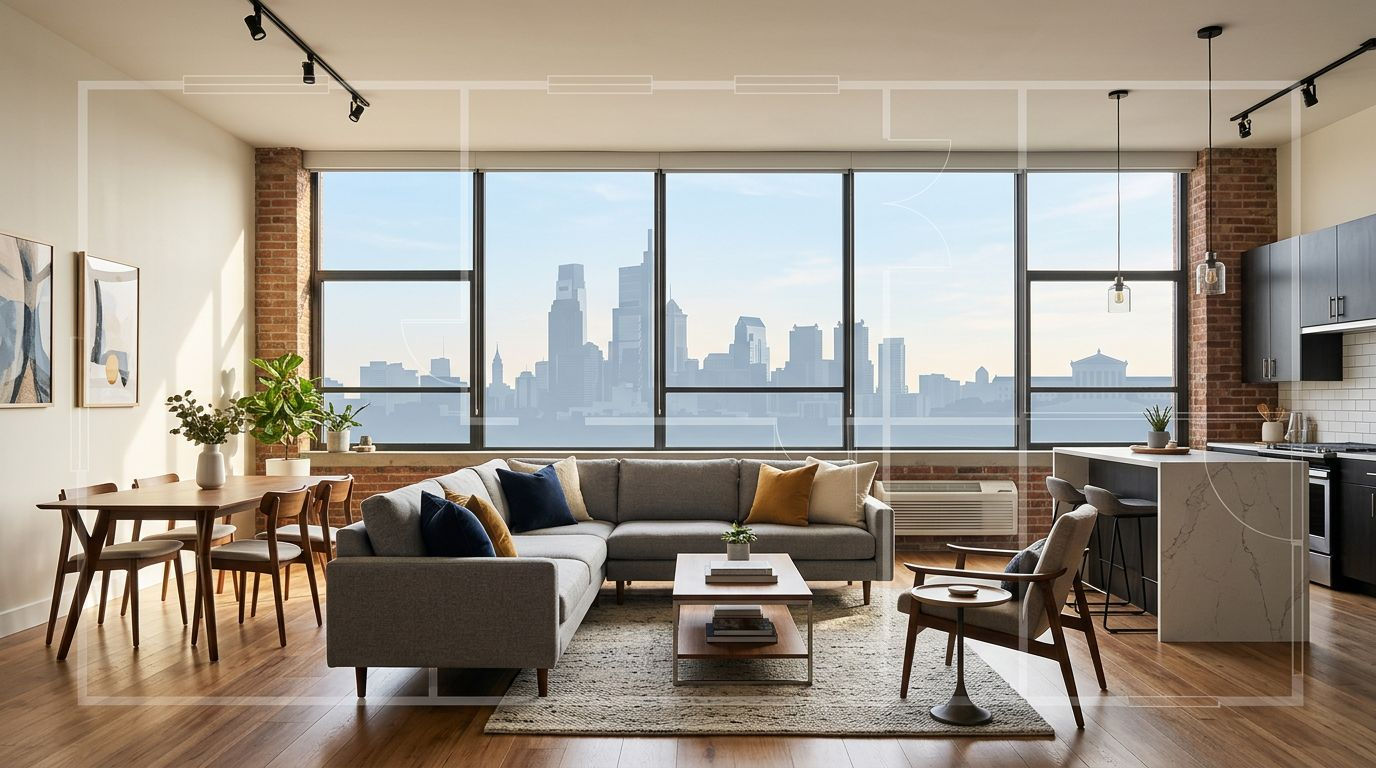
How to Compare Philadelphia Apartment Floor Plans in 2026

Updated: Jul 1
A floor plan can look perfect online and still feel awkward the second you move in. The sofa blocks the walkway, the bed only fits on one wall, and the office nook barely holds a chair.
That matters even more when you are navigating the variety of Philadelphia apartment floor plans, as building styles change significantly from block to block. Whether you are searching for a high rise in Center City or a quiet unit in the suburbs, the process of evaluating your space remains the same. In 2026, Philadelphia rent market trends point to a steadier market with a bit more choice, so you can take your time comparing layouts. While online photos and virtual tours are excellent starting points for your search, learning how to critically analyze a floor plan will ensure you find a home that fits your life before you ever step foot inside for a showing.
Key Takeaways
Compare usable space instead of relying solely on the listed sq ft.
Check room flow, door swings, window placement, and closet depth before you tour.
Match the layout to how you live, whether you work from home, live with roommates, or need stroller or pet space.
Older Philadelphia buildings can have charm, but they also bring quirks like narrow rooms, odd corners, and less storage.
Similar units can cost different amounts once you add mandatory fees, parking, pet charges, and utilities.
Read the lease as carefully as the floor plan, especially the terms on entry, repairs, auto-renewal, and move-out charges.
Start With Usable Space, Not Raw Square Footage
Square footage is a starting point, not a verdict. Two apartments with the same total sq ft can live very differently if one wastes space on hallways and the other provides more open, functional rooms. Keep in mind that a polished artist's rendering often makes rooms appear larger or more furnished than the actual space allows.
That happens frequently with Philadelphia apartment floor plans. A newer mid-rise may have cleaner lines and better closet placement. Meanwhile, a converted rowhome might offer more charm but a narrower living room, a chopped-up kitchen, or a bedroom that only fits a full bed comfortably.
Before you tour, study the floor plans carefully. Look for approximate dimensions rather than relying solely on the total size listed. The label "Bedroom" does not tell you whether a queen bed leaves enough space for nightstands, and the term "Den" does not confirm if your desk will fit without blocking the closet.
A good guide to reading apartment floor plans can help you spot those potential issues early. Use your own furniture sizes, then compare them against the dimensions on the plan. If your couch is 84 inches long, check whether the living room has a dedicated wall for it.
Pay attention to shape as much as size. A long, narrow room can feel smaller than a slightly more compact square room. The same goes for kitchens with oversized islands that restrict circulation space.
If you are choosing between studio apartments and one bedroom floor plans, ask yourself where your daily life will happen. Sleeping, eating, working, and relaxing all need a place. A larger studio can often beat a cramped one-bedroom if the walls do not trap your furniture into awkward, unusable positions.
Check Flow, Light, and Storage
Good layouts reduce friction. You should be able to walk from the entry to the kitchen, bathroom, and bedroom without dodging furniture every few steps.
That flow starts with door swings and path width. A bathroom door that opens into a tight hall is annoying every day. So is a closet door that blocks a dresser. When you are comparing plans online, utilize virtual tours to trace the route you would take while carrying groceries, a laundry basket, or a suitcase.
Pick the layout that makes daily life easy. Extra square footage will not help if the apartment fights your routine.
Natural light also changes how a floor plan feels. A living room with one small window at the far end can look larger on paper than it feels in person. Corner units, wider windows, and better bedroom separation often beat a higher square-footage number.
Storage needs the same scrutiny. Look for linen closets, pantry space, entry storage, and where you would put a vacuum, luggage, or winter coats. If you are looking at pet-friendly apartments, keep in mind that these units require specific layouts for crates, food bowls, and pet beds. Many renters focus on bedroom closets and forget these essential functional needs.
How to read an apartment floor plan before you tour offers a useful reminder: study the layout's overall flow, not only the room count.
In Philadelphia, older buildings may also hide odd cut-ins, low basement ceilings, radiator placements, or deep windowsills that steal furniture space. During a tour, check how the apartment actually feels with doors open, curtains drawn back, and you standing in the corners. Paper can flatter a layout. A real walkthrough will not.
Match the Plan to Your Routine
The right floor plan depends on who you are before it depends on what looks nicest in the listing photos. A student may want compact studio apartments close to campus. A remote worker may need one quiet wall and a door that closes. A downsizer may care more about elevator access and storage than a formal dining area.
Work-from-home space is a major divider in 2026. Many listings label a nook as an office, but some are only deep enough for a tiny table. Check width, outlet placement, and whether the desk area sits next to the kitchen, the front door, or the TV wall. Noise travels fast in open layouts.
This quick comparison makes the tradeoffs easier to see.
Layout Type | Good Fit | Watch For |
|---|---|---|
Studio or Alcove Studio | Solo renters, students, downsizers | Limited storage, bed visible from living area |
Open One-Bedroom | Couples, solo renters who want flexibility | Noise and cooking smells carry farther |
Split Two-Bedroom | Roommates, some small families | Smaller shared living room in some plans |
Loft or Bi-Level | Renters who want separation | Stairs, less usable wall space |
When considering one bedroom floor plans, think about how the transition between sleeping and living areas affects your daily flow. Roommates looking at two bedroom apartments should pay extra attention to bedroom separation, closet fairness, and bathroom access. A split-bedroom plan often works better than one with both bedrooms off the same small hall. If you prioritize having a private bedroom and your own private bathroom, verify if the layout provides that separation or if you will be using a shared bathroom in a high-traffic area. On the other hand, families may prefer bedrooms grouped closer together.
Pet owners should notice entry space and where food bowls, crates, or litter can go without taking over the apartment. Downsizers should focus on closet count, pantry storage, and whether the bathroom is easy to access at night.
For more detail on what to study before a tour, what to look for when viewing an apartment floor plan has a useful checklist.
Compare the Building, Costs, and Lease Along With the Unit
A great floor plan can lose badly to a better building. If two layouts are close, compare what happens outside the unit door.
Elevator access matters if you are moving groceries, bikes, strollers, or laundry. A package room saves daily hassle. Keyless secure entry, bike storage, outdoor space, a fitness room, or a study nook can make a smaller apartment feel easier to live in. Meanwhile, a bedroom next to the elevator, trash room, or stairwell can ruin a beautiful layout.
Cost also needs a second look. In Philadelphia, two similar one-bedrooms may have very different real prices once you add mandatory fees, parking, pet rent, and utilities. Application and screening charges are capped locally in 2026 at $50 or the actual screening cost, whichever is lower. To accurately calculate my costs, I always create a spreadsheet that includes the security deposit and the projected monthly installment. While the base rent provides a starting point, you must confirm the total monthly leasing price by accounting for these mandatory fees. Keep in mind that some apartments include unit premiums for better views or higher floor levels. Furthermore, compare the base price of a unit against an inclusive rate if the building bundles utilities, as this affects the overall affordability of your chosen lease term. Always ask for a full list of recurring charges before you commit.
Then read the lease with the same care. Watch for automatic renewal deadlines, broad landlord entry language, blanket repair clauses, and move-out terms that treat normal wear like damage. Routine scuffs and aging paint should not be billed like tenant-caused harm. If a landlord will not give you time to read the document, that is a warning sign by itself.
During the tour, check more than the layout. Look for leaks, weak window seals, broken locks, missing smoke detectors, mold signs, and hot water issues. Philadelphia renters have strong repair rights when serious conditions affect habitability, but it is much better to spot trouble before you sign.
Final Thoughts
The smartest way to compare Philadelphia apartment floor plans is to picture your real day inside them. Consider where your shoes will go, where your desk will sit, where your groceries will land, and how your guests will move through the space.
A layout that supports your daily routine will beat a prettier one almost every time. In a steadier 2026 market, finding the right fit for your lifestyle matters much more than floor plan hype. By carefully evaluating different Philadelphia apartment floor plans, you ensure that your new home offers the comfort and functionality you need for the long term.
FAQs
Is an Open Layout Always Better?
No. Open layouts can feel bright and social, but they also carry noise, cooking smells, and screen glare. If you work from home or live with roommates, more separation may help.
How Can I Compare Floor Plans Online Before Touring?
Use furniture measurements, zoom in on door swings, count windows, and look for closet depth. Save screenshots of your top choices, then compare them side by side instead of relying on memory.
Which Layout Usually Works Best for Roommates?
A split-bedroom plan is often the safest bet for those browsing two bedroom apartments. It provides each resident with a private bedroom to ensure better sound isolation and a fairer setup regarding guests, sleep schedules, and daily routines.
What Lease Terms Matter After I Choose a Layout?
Focus on entry rules, repair responsibility, renewal deadlines, cleaning charges, and damage language. A strong floor plan will not make up for a weak lease.


Comments