
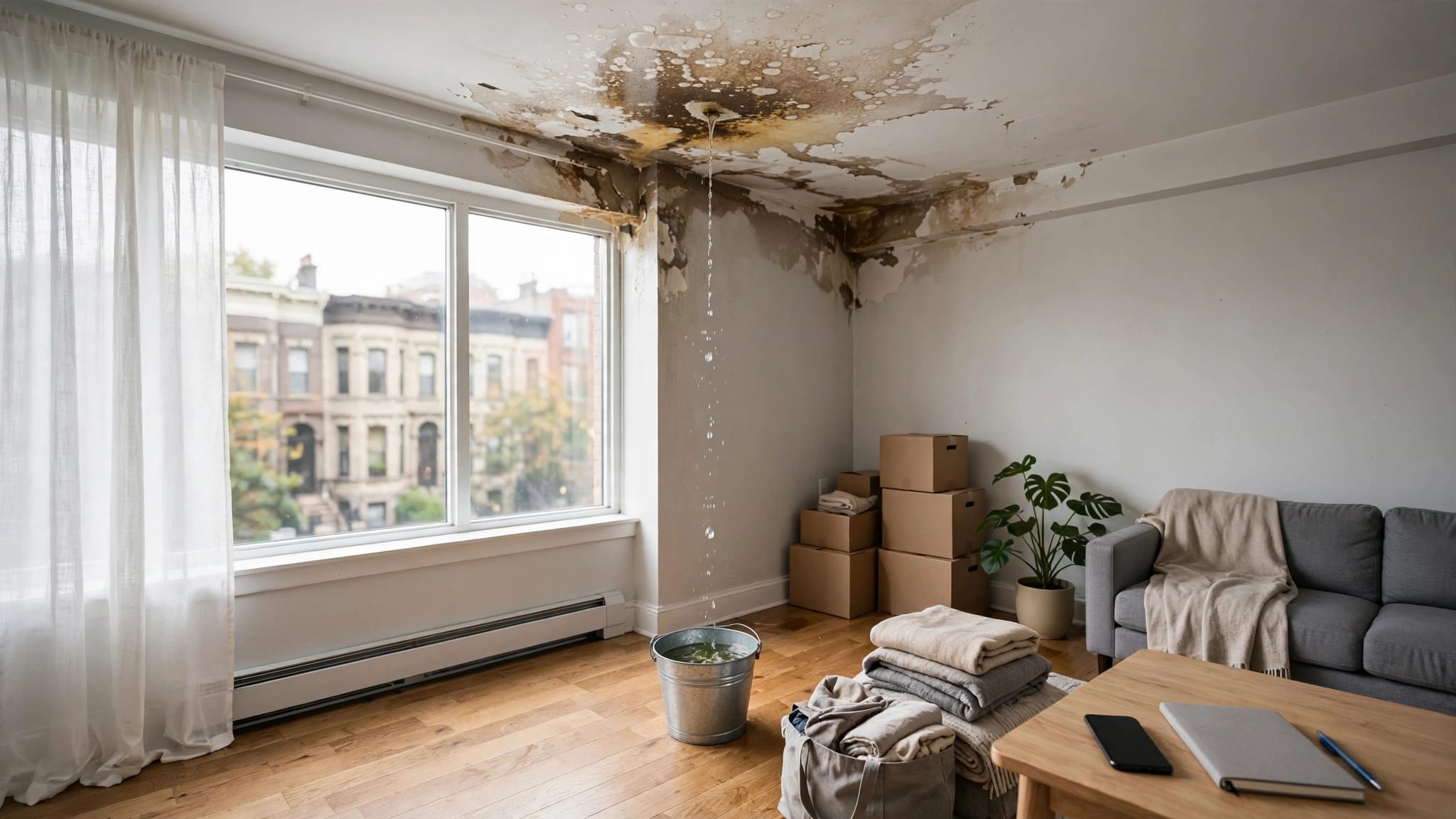
What to Do When Your Philadelphia Ceiling Leaks

When your apartment ceiling starts leaking, stay clear of electrical fixtures and sagging drywall, then contact emergency maintenance. A Philadelphia ceiling leak needs prompt attention, even when the first sign is a small stain.
Your priorities are safety, stopping further damage, and creating a written record. Once you're clear of immediate hazards, the next step is getting management the details needed to arrange repairs.
Key Takeaways
Keep away from bulging ceilings, wet lights, and outlets. Call 911 if there's immediate danger.
Call emergency maintenance, then follow up in writing with photos and your unit number.
Move belongings only when you can reach them safely.
Repairs should address the source, dry the space, and replace damaged materials before repainting.
Make the Area Safe First
Stay Away From Electrical Hazards
Water dripping through a light fixture, smoke detector, or ceiling fan creates an electrical risk. Don't touch the fixture or operate nearby switches. Also avoid outlets, cords, and electronics that are wet.
Don't approach a breaker panel through standing water or attempt to disconnect wet equipment. Leave the hazardous area and tell emergency maintenance exactly where water is entering. Call 911 for immediate danger, such as sparks, smoke, or someone receiving an electric shock.
Treat a Bulging Ceiling as Unsafe
Wet drywall and plaster can lose strength, separate, and fall. Sagging, new cracks, falling fragments, or a growing bulge mean you should keep everyone out of that area.
Don't poke a hole in the ceiling, press on it, or climb underneath it. Although draining a bulge appears in some DIY advice, hidden wiring and heavy, saturated material make that unsafe for renters.
If the ceiling is actively collapsing, leave the room immediately and call 911 when emergency help is needed.
Notify Your Landlord and Document the Damage
Call First, Then Send Written Notice
Use the emergency maintenance contact listed in your lease or resident instructions. Active water entry shouldn't sit in a routine request queue while water keeps entering.
Follow the call with an email, text, or portal message. Include your apartment number, affected room, when you noticed the problem, and whether the water leak is still active. Mention sagging, electrical exposure, or sewage odors prominently.
Pennsylvania's implied warranty of habitability requires landlords to maintain safe, sanitary, livable housing. Serious leaks can affect those basic conditions.
Save Evidence Without Entering Danger
Take wide photos showing the room and closer images of stains, drips, and damaged belongings. Photograph fresh water spots from a safe position rather than standing beneath unstable material.
Keep a dated log of calls, messages, visits, and changes in the water intrusion. Weather matters too: record whether the dripping started during rain or after an upstairs bathroom was used.
Save receipts for necessary expenses. Those records may matter in an insurance claim or repair dispute.
Identify Clues Without Opening the Ceiling
The stain shows where water emerged, not necessarily where it entered. Water can travel along framing, pipes, and floor assemblies before reaching your ceiling.
These patterns help maintenance choose where to investigate.
Pattern You Notice | Possible Source |
|---|---|
Dripping during or after rain, especially on the top floor | Roof leak, roof covering, flashing, or exterior water entry |
Water after an upstairs shower, toilet flush, or laundry cycle | Drain, supply line, toilet seal, or appliance leak |
Persistent dripping regardless of weather | Pressurized plumbing leak |
Dampness near cooling equipment during humid weather | Condensation or a blocked condensate drain |
These are clues, not diagnoses. A neighbor's overflowing tub can resemble a pipe leak, while roof water may appear far below its entry point.
Plumbing Problems Can Stay Hidden
Common problems include water backups and pipes damaged by rust, corrosion, or freezing. A leaking toilet or an accidental overflow upstairs can also affect your apartment. Frozen pipes can split, and a burst pipe or other leaking pipe may cause sudden dripping.
Some leaks remain concealed inside walls or beneath concrete slabs for extended periods. EPA WaterSense estimates that average household leaks waste nearly 10,000 gallons annually, although that isn't an estimate for your particular apartment.
Watch for Changes Beyond the Stain
Report decreased water pressure, musty odors, mold or mildew, and bubbling, cracked, or peeling walls. A steep increase in a metered water bill can also suggest hidden leakage. A wall leak can carry water through wall cavities or framing, so report moisture on vertical surfaces as well as stains overhead.
Our guide to apartment water pressure problems covers another symptom worth documenting. Neither low pressure nor an unusual bill proves a ceiling leak's source by itself.
Protect Your Belongings While You Wait
If the ceiling isn't sagging and there's no electrical hazard, place a bucket beneath the drip. Move furniture, rugs, clothing, and dry electronics away from the affected area.
Photograph any water damage to your belongings, and keep receipts for damaged or replacement items.
Keep children and pets out. Leave a clear route for maintenance, and tell management if water is spreading toward another room or apartment.
Don't use electrical drying equipment where it could contact water. Avoid fans if the water may be contaminated with sewage or other contaminants, since moving air can spread them.
You don't need to remove drywall, climb onto the roof, or enter another resident's apartment. Those tasks belong with management and qualified professionals.
If you cannot safely use a bedroom or essential area, say so in your written notice. Describe the actual restriction rather than reporting only a stained ceiling.
What Professional Leak Detection Should Include
Professional leak detection should combine your timeline with checks of the roof, plumbing, adjacent units, and affected materials. Depending on the clues, management may need a plumber, roofer, or water-damage specialist. A plumber can check supply and drain lines when the evidence points to a plumbing source.
Thermal imaging can reveal temperature differences associated with moisture without immediately opening walls or excavating. However, it doesn't see through walls or prove the source alone. Moisture readings and targeted inspection help confirm the finding; limited openings may still be necessary.
Ask for a written leak report identifying the likely cause, affected areas, supporting findings, recommended work, and estimated repair costs. It should explain the evidence and define the scope for leak repair.
Some services offer free mold testing. Philadelphia provider Dr. Leaks advertises that service, along with 12-month interest-free financing and a 100% customer satisfaction guarantee. Those offers don't replace a clear diagnosis, and financing isn't ordinarily a renter's first responsibility.
If a roofer proposes resealing the entire roof because the source of a suspected roof leak remains unclear, the proposal should explain the evidence and scope. Roof leaks can return during heavy rain when the original repair misses the source.
Follow the Repair Through Drying and Restoration
Stop the Water and Dry the Space
A complete leak repair starts by identifying and fixing the source. Professionals then remove unsalvageable wet drywall, dry the exposed space, and rebuild the damaged ceiling.
EPA recommends drying wet materials within 24 to 48 hours to reduce mold risk. That's a prevention target, not a guarantee that mold appears at a particular hour or a legal repair deadline.
Wet ceilings and walls can support mold that affects health. Report new musty odors or visible growth instead of covering them with paint.
Confirm the Fix Before Repainting
Drying time depends on the amount of water, material thickness, airflow, humidity, and concealed insulation. A ceiling can look dry while the cavity above it remains damp.
Soft, sagging, crumbling, or mold-damaged wallboard generally needs removal and replacement. Professionals should assess moisture before closing the ceiling.
For rain-related water entry, the next appropriate rainfall helps test whether the repair worked before final cosmetic repairs. That waiting period shouldn't delay stopping active water, removing unsafe material, or starting drying.
A dry-looking stain doesn't prove the cavity is dry. Moisture assessment should come before new drywall and paint.
Escalate if a Serious Leak Goes Unresolved
Landlords need a reasonable opportunity to arrange repairs, but urgency depends on the hazard. Active water near electricity demands faster action than an old, dry stain.
If management doesn't respond to a serious condition, contact Philadelphia 311 to report the problem and request an L&I inspection. Keep the complaint number and any inspection report with your repair records. An inspection request doesn't guarantee an immediate repair.
Our Philadelphia tenant repair rights guide explains how written notice and documentation support escalation.
Don't stop paying rent or deduct contractor charges on your own. Pennsylvania's tenant repair remedies depend on the circumstances and proper procedure. A tenant attorney or housing advocate can help you avoid turning a repair dispute into a nonpayment case.
Meanwhile, cooperate with reasonable repair access and keep recording missed visits or recurring leaks.
Frequently Asked Questions
Can I Sleep in a Room With a Leaking Ceiling?
Avoid sleeping beneath active dripping, sagging material, or water near electrical fixtures. If the room cannot be used safely, notify management immediately and request instructions about safe occupancy while repairs are arranged.
Who Pays for Repairs and Damaged Belongings?
Management generally arranges repairs to building systems and finishes. Responsibility for personal belongings depends on the cause, fault, lease terms, and insurance coverage. Renters insurance may cover certain sudden water losses and temporary living expenses, but coverage isn't automatic. Photograph damaged items and keep receipts.
Is a Ceiling Stain Always an Active Leak?
No. A dry stain may remain after an earlier repair. However, a growing stain, renewed dripping, softness, or a musty smell warrants another report. Don't assume fresh paint means the underlying problem was resolved.
Get the Source Fixed Before the Ceiling Is Finished
Water entering through an apartment ceiling calls for a safe response, prompt reporting, and a repair that addresses the source. Protect belongings only when you can do so without entering danger.
Keep your photos and written updates together until drying and restoration are complete. Paint is the last step, after the water source is stopped and damaged materials are properly addressed.



Comments