
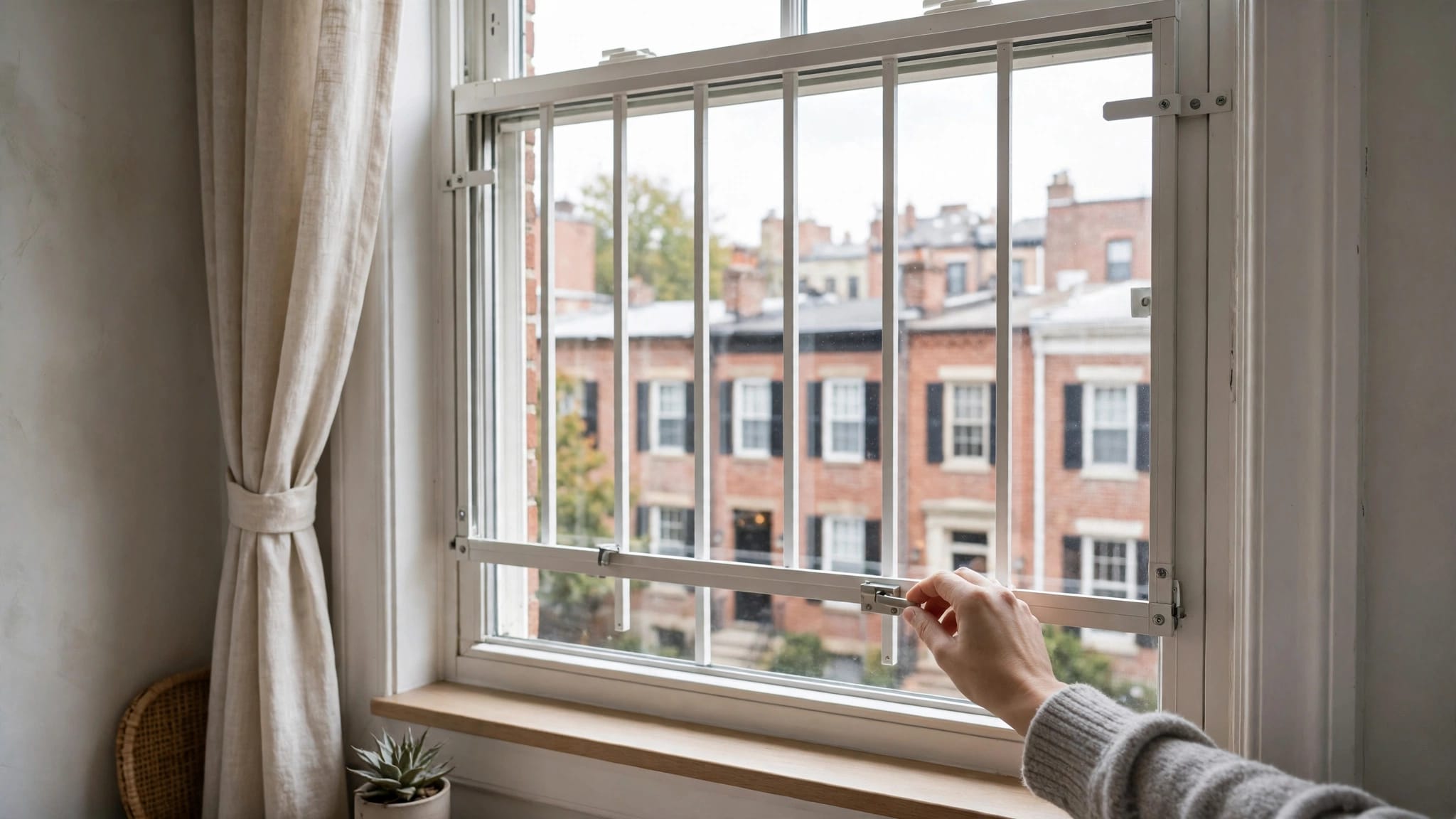
Philadelphia Window Guard Rules for Renters With Children

Philadelphia's windows and doors ordinance isn't an age-based requirement to install guards in occupied rentals. If you're researching Philadelphia window guard rules, separate that vacant-building law from a landlord's responsibility to address unsafe windows.
You can still request fall-prevention protection, report defective hardware, and document unresolved hazards. However, a request to add guards differs from a demand to repair a broken window.
Start by identifying the condition that needs attention and whether the window is part of an emergency escape route.
Key Takeaways
Philadelphia's vacant-building ordinance doesn't establish a child-age-based guard requirement for occupied apartments.
New Jersey's written-request rules don't apply across the river in Philadelphia, and proposed Pennsylvania legislation isn't proof of an enacted requirement.
Request guards and window repairs in writing, including photos, affected rooms, and your child's age.
Window screens don't prevent falls. Guards and opening limiters must also preserve required emergency escape.
Report unresolved unsafe conditions through 311, and seek legal help before withholding rent.
What Philadelphia Window Guard Rules Mean for Renters
Repairs and Added Protection Are Different
A child's age alone doesn't establish a Philadelphia landlord's obligation to install guards. A broken sash, damaged frame, failed lock, or loose existing guard presents a different issue: whether the rental meets applicable housing-code and maintenance requirements.
Pennsylvania's implied warranty of habitability requires housing fit for ordinary living. Still, that doesn't make every requested upgrade mandatory.
Describe the actual defect instead of relying only on the phrase "childproofing." Our rental window condition checks cover warning signs such as windows that won't lock or stay in position.
New Jersey Rules and Pennsylvania Proposals Aren't Local Law
New Jersey's tenant window-guard guide describes installation duties after qualifying written requests involving children age 10 or younger in covered housing. Those requirements aren't Philadelphia rules.
Pennsylvania's 2021 House Bill 1748 proposed a similar written-request system, including a 30-day installation deadline. However, the proposed bill text doesn't establish an enacted statewide duty. Don't treat its deadlines or age thresholds as current tenant rights.
How to Request Window Guards From Your Landlord
Identify the Windows and Explain the Risk
Send a dated email, portal message, or letter identifying each affected window. Include your unit number, the room, your child's age, and any broken or missing hardware.
Explain whether you're requesting a repair, permission to install a guard, or management-provided installation. Photograph defects from a safe position without placing a child near the opening.
Also mention accessible hallway or common-area windows. Their location may matter as much as the windows inside your apartment. Keep a copy outside the maintenance portal in case access changes.
Get the Installation Arrangement in Writing
Ask management to identify the device, installer, proposed timing, and responsibility for costs and maintenance. A written agreement should also address removal and restoration when you move.
Don't drill into frames or alter existing guards without authorization. Modifications can damage hardware, affect warranties, or create escape problems.
In older apartments, disturbing painted frames can also create lead-dust risks. Leave assessment and installation to qualified professionals rather than sanding, scraping, or drilling yourself.
If you report the issue by phone, send a same-day written summary. That creates a clear record of what management received.
Choosing Protection Without Blocking Emergency Escape
Screens and Ordinary Locks Have Limits
Screens keep insects out; they aren't fall-prevention barriers. A closed-window lock also provides no protection once someone opens the window.
Nationwide Children's Hospital recommends window stops that prevent openings greater than 4 inches. A properly fitted guard provides another form of fall protection, depending on the window and installation.
Meanwhile, move beds, chairs, and climbable furniture away from windows. Keep accessible windows closed and locked until suitable protection is installed. Supervision remains necessary even when guards are present.
Emergency Escape Must Remain Available
A guard, security bar, or opening limiter must not defeat a required escape route. Windows opening onto fire escapes deserve particular attention.
The Consumer Product Safety Commission's guard guidance discusses standards that address fall prevention and emergency escape. Have a qualified installer select equipment appropriate for the opening.
Avoid improvised bars, tension-mounted barriers, or devices selected only because they fit the frame.
A device can reduce a fall risk while creating a fire-escape hazard. Both risks need attention before installation.
Our Philadelphia apartment fire-protection guide also explains why clear exits belong in every renter's emergency plan.
What to Do When a Landlord Doesn't Respond
Follow Up and Report Unsafe Conditions
Send a follow-up referencing your original request and any worsening condition. Save photos, dates, replies, and missed appointments together.
If a window defect remains unsafe, call 311 to report the condition and request an inspection by the Department of Licenses and Inspections, or L&I. Describe the defect rather than assuming that missing guards alone establish a violation.
Keep children away from the affected room or opening while the hazard remains. For an immediate emergency, call 911.
An inspection can address applicable code violations; it doesn't guarantee that management must install your preferred product.
Protect Your Records and Avoid Risky Shortcuts
Philadelphia prohibits retaliation for protected repair complaints and reports of code violations. Save threatening messages, unusual notices, or other records if problems follow your complaint.
A landlord's denial of an optional upgrade and refusal to repair a dangerous defect aren't automatically the same legal issue.
For broader repair disputes, our Philadelphia habitability and repair guide explains the distinction between serious defects that pose a hazard and routine maintenance.
Before withholding rent, deducting installation costs, or ending a lease, seek tenant legal assistance. Those remedies can create nonpayment or lease disputes when used incorrectly.
Why the Vacant-Building Ordinance Causes Confusion
Philadelphia Property Maintenance Code Section 306.2 addresses vacant property. Its blighting influence provision requires windows with frames and glazing in window openings and a door at each entryway, rather than uncovered openings or boards alone.
Under the objective test, a building missing required windows or doors qualifies when 80% or more of buildings on its block face are occupied.
The subjective test allows the Commissioner of Licenses and Inspections, consulting other City officials, to assess significant adverse community effects. Relevant considerations include public security, community morale, marketability, and surrounding property values.
These vacant-premises provisions concern securing and maintaining vacant buildings. They don't require child-protection guards in occupied apartments.
Historical enforcement involved $300 per window or door per day, so violations multiplied across large buildings. That figure describes historical enforcement discussed in the litigation below, not a current penalty. It also isn't a fine a renter can automatically claim against a landlord.
What the Rufo Decisions Actually Established
In Rufo v. Board of Licenses and Inspection Review, decided December 22, 2016, the Commonwealth Court upheld a ruling that municipal police power couldn't rest solely on aesthetic concerns.
The litigation involved a former brewery facing reported fines of $33,000 per day. Replacement costs for windows and doors exceeded its assessed value. The owner argued that vandals would break newly installed glass and reported that three installed windows were broken within days.
The City couldn't identify the studies it claimed supported windows and doors as a blight remedy. Also, wood or blocking could remain behind actual windows and doors, which weakened the argument that visible glazing necessarily improved security. Boarding alone wasn't equivalent to compliance.
However, the story didn't end in 2016. In its 2018 Rufo decision, the Pennsylvania Supreme Court rejected the lower courts' constitutional analysis, vacated their orders, and remanded the case.
The 2016 ruling therefore shouldn't be described as permanently invalidating the ordinance. Neither decision created child-safety guard rights for renters.
Window Signs and Burglar Bars Follow Different Rules
Philadelphia's rules for window signs allow qualifying signs without a zoning permit. They're generally limited to ground-floor windows, with certain second-floor exceptions, and 20% of transparent glazed area.
Signs may occupy no more than two windows, two transparent glass doors, or one of each. These are advertising rules, not child-protection requirements.
Likewise, burglary protection doesn't automatically prevent falls. Hardware-store bars or lock pins may restrict sliding doors or windows, but partly open positions still need fall-risk and egress assessment.
Some burglary advice recommends double-cylinder deadbolt locks with reinforced strike plates. Because these locks require an interior key, they can delay escape. Don't install them on required exits without professional code review.
Photographs and identifying marks can help recover stolen valuables. Use a non-sensitive identifier rather than exposing your driver's license number.
Frequently Asked Questions
Does My Landlord Have 30 Days to Install Guards?
Don't assume that deadline applies in Philadelphia. It appears in proposed Pennsylvania legislation, which doesn't establish a current installation requirement. A dangerous window defect still deserves prompt written reporting and an appropriate repair response.
Can I Install a Guard Myself?
Get written permission before modifying the window. The arrangement should cover the device, installer, payment, maintenance, and emergency escape. A removable product can still be unsuitable or damage the frame, so avoid treating "no drilling" as proof of safety.
Can I Report Missing Guards to L&I?
You can report a suspected unsafe condition through 311. Explain the accessible opening, broken hardware, or loose guard accurately. L&I determines whether applicable requirements are violated; a young child's presence doesn't automatically prove a guard violation.
Put Window Safety and Written Records First
Philadelphia window guard rules require careful distinctions between vacant-building enforcement, required repairs, and requests for added protection. Your strongest starting point is a specific written request describing the actual risk.
Keep children away from unsafe openings while repairs or installation are pending. Suitable fall protection must work alongside emergency escape, and unresolved hazards deserve documented follow-up.


Comments