
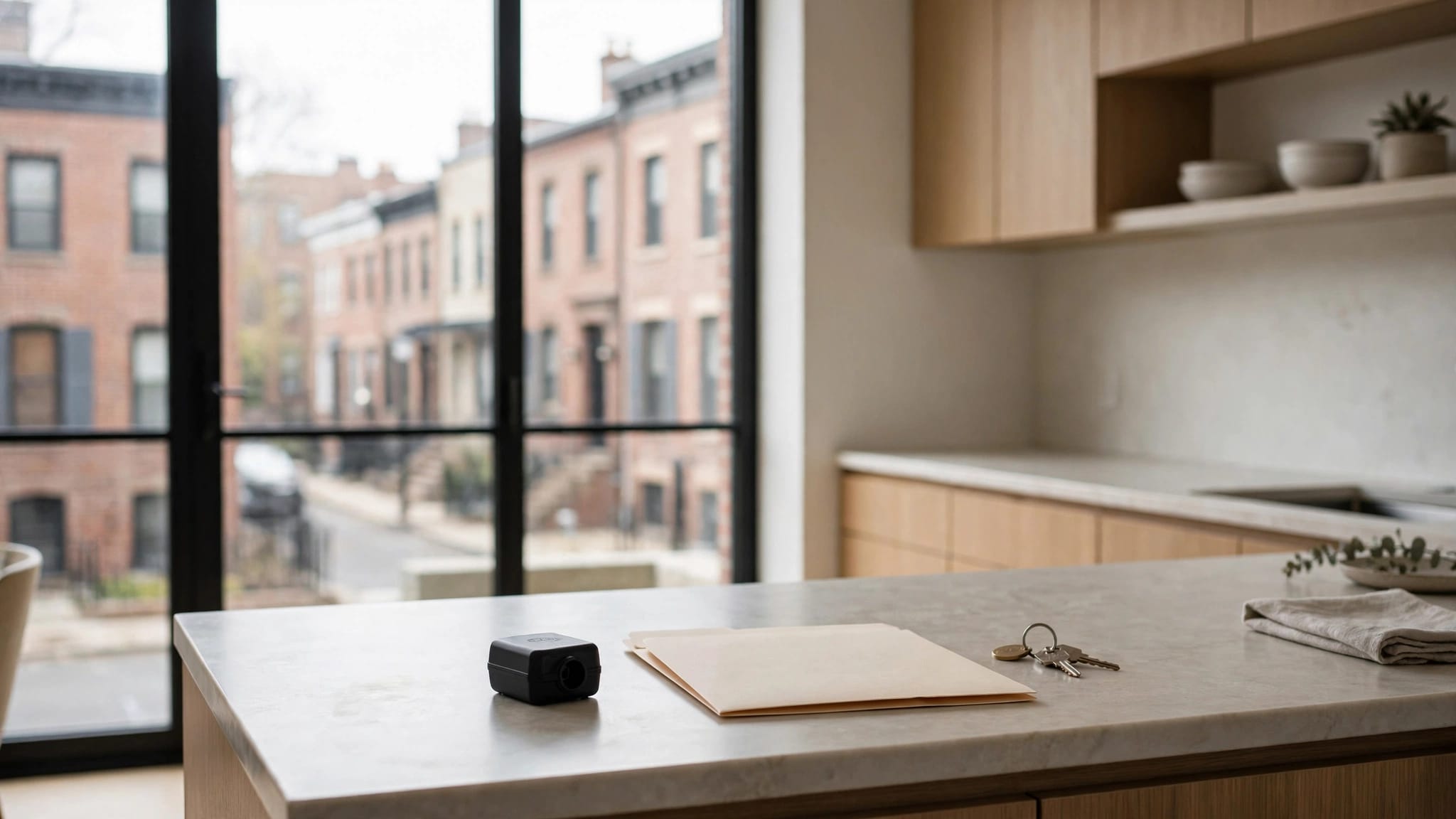
Radon in Philadelphia Apartments: Before You Sign

If you're researching "radon Philadelphia apartments," ask for your unit's test results and a written plan for elevated readings. The EPA recommends mitigation at 4 pCi/L or higher, but Pennsylvania doesn't generally require landlords to test rentals before leasing them.
Because it has no smell or color, a tour can't reveal it. Start with the apartment's floor level, testing history, and management's response plan.
Key Takeaways
Ask for dated results identifying the apartment, testing location, and measurement method.
Basement units and units on the ground floor deserve particular attention, but upper floors aren't automatically radon-free.
A short-term test can inform a leasing decision; longer testing better estimates average exposure.
Get testing arrangements, repair responsibilities, and any cancellation agreement in writing before signing.
Why Radon Matters in Philadelphia Apartments
Health Risks You Can't See
Radon is a radioactive gas released as uranium breaks down in soil and rock. It can enter buildings through foundation cracks, joints, and openings around pipes.
According to the EPA's radon health risk guidance, it's the second leading cause of lung cancer and causes about 21,000 U.S. deaths annually. Smoking increases the combined risk. Testing matters because radon exposure produces no immediate warning you can reliably recognize.
Floor Level and Local Test Results
The EPA and Surgeon General recommend testing every residence below the third floor. Basements and ground-floor apartments generally face greater exposure because they're closest to the soil.
Pennsylvania DEP reports that approximately 40% of Pennsylvania homes tested exceeded 4 pCi/L. That's a testing statistic, not the percentage of every home statewide.
PA Radon Hub's Philadelphia-area compilation reports elevated results in 12% of 154,342 basement tests, with a median of 1.7 pCi/L. First-floor results reached that threshold in 5% of 19,719 tests. These aren't random population samples or predictions for your apartment.
For other lower-level concerns, our Philadelphia basement apartment safety guide covers escape routes, moisture, and rental suitability.
What Philadelphia Landlords Must Disclose
Federal and Pennsylvania Rules
No federal law generally requires landlords to test apartments for this gas or disclose radon levels to tenants. Pennsylvania likewise has no blanket radon testing or radon disclosure requirement for ordinary apartment leases.
Don't confuse rental rules with sales rules. Pennsylvania's Real Estate Seller Disclosure Law, 68 Pa.C.S. 7301-7315, addresses residential sales. Section 7304(b)(14) includes hazardous substances such as radon among disclosure subjects. That doesn't create an equivalent testing requirement before every lease.
What Rental Protections Mean
Colorado, Florida, Illinois, and Maine have landlord radon disclosure requirements, although their scope differs. Florida's warning requirement, for example, doesn't mean every covered apartment has been tested.
In Philadelphia, the absence of a radon-specific testing mandate doesn't erase a landlord's broader habitability obligations. However, an elevated result doesn't automatically authorize rent withholding or lease termination. Remedies depend on the circumstances, written notice, and applicable law.
Before signing, you can request testing and negotiate written terms. You generally can't force testing solely by citing EPA recommendations. After move-in, document elevated results and request a response; obtain tenant legal advice before withholding rent or leaving under a disputed lease.
Questions to Ask Before Signing
Request the Actual Test Report
Ask: "Has this apartment been tested for radon, and can I receive the complete report?"
The report should identify the unit, room, dates, duration, device, and result in pCi/L, meaning picocuries per liter. A basement reading elsewhere in the building doesn't establish your apartment's level.
Also ask whether renovations, foundation work, or ventilation changes occurred afterward. If mitigation already exists, request the post-installation test and subsequent results.
Put the Response Plan in Writing
Ask who will arrange and pay for testing, what happens after an elevated result, and when follow-up testing will occur. Before committing money, negotiate whether you can cancel or delay occupancy if the result requires mitigation.
A practical request is: "Please include the testing deadline and agreed response to elevated readings in the lease addendum."
A Certificate of Rental Suitability isn't a radon test report.
A standard home inspection also doesn't establish a unit's radon level unless radon testing is specifically performed and documented.
Our Philadelphia rental inspection guide explains the separate paperwork associated with rental compliance.
How to Test Your Apartment
Choose a Test and Budget
Short-term charcoal canister tests commonly run for 48 to 96 hours, depending on the product. Long-term alpha-track tests run for 90 days or more and better reflect exposure across changing weather and living conditions.
A retail radon test kit typically costs about $15 to $30. Some packages include laboratory analysis and return shipping; others charge separately. Budget about $150 to $300 for professional testing.
Pennsylvania requires DEP certification for radon services, including paid testing. Occupants testing their own residences fall under an exemption, so renters can use appropriate home kits without becoming certified.
Place and Run the Test Correctly
Test the lowest regularly occupied level of your apartment, following the device instructions. Use a bedroom or living area rather than a kitchen, bathroom, or shared hallway.
For typical short-term testing, keep windows and exterior doors closed except for normal entry and exit. Tests lasting less than four days generally require closed-house conditions for at least 12 hours beforehand.
Place the detector at least 20 inches above the floor, away from drafts, excess moisture, and direct heat. Record placement and timing, then return it promptly as instructed. Don't alter building ventilation to influence the reading.
When Free Radon Kits Are Available
Free kits aren't automatically available to every Pennsylvania renter. DEP's home radon program provides a free short-term confirmation kit after an initial result over 100 pCi/L. The program's phone number is 800-237-2366.
National Radon Action Month in January is a good time to check available resources. Pennsylvania kit eligibility depends on documented test or mitigation conditions, not the month.
DEP also offers a free long-term alpha-track detector after an active mitigation system was installed within the previous year. Applicants must supply installation documentation and a post-mitigation result below 4 pCi/L.
Renters should coordinate those building-related records with management. Other states have different programs, including Colorado's CDPHE radon program, but a free-kit offer elsewhere doesn't establish eligibility in Pennsylvania.
What to Do After a Result of 4 pCi/L or Higher
The EPA's Citizen's Guide to Radon recommends fixing buildings at or above the EPA action level of 4 pCi/L. It also advises considering reductions between 2 and 4 pCi/L.
Save the complete result. Keep the laboratory report, testing dates, placement details, and relevant lease documents. Record any conditions that may have affected the test.
Notify management in writing. Attach the report and request a written testing and mitigation plan. If you haven't signed, resolve the arrangement before committing.
Arrange appropriate follow-up testing. An initial short-term result generally needs confirmation. Results substantially above the action level warrant faster follow-up rather than waiting through a months-long test.
Request a certified mitigation assessment. Management should coordinate access, building investigation, and permanent work. Don't drill into the foundation or alter shared mechanical systems yourself.
Retest after mitigation. Installation alone doesn't demonstrate success. Obtain the post-mitigation result and keep it with the original report and correspondence.
An elevated result calls for timely action, but this is generally a long-term exposure concern rather than a carbon monoxide-style emergency. If management refuses to respond, seek tenant legal advice with your records in hand.
What Mitigation Costs in an Apartment Building
PA Radon Hub's Philadelphia cost estimates put active sub-slab depressurization at roughly $1,100 to $2,800. That provides a residential planning range, not a guaranteed price for an entire apartment building.
An active sub-slab depressurization radon mitigation system uses a fan and piping to draw soil gas from beneath the slab and discharge it outdoors. Sealing openings can support the system, but sealing alone usually isn't an adequate solution.
Multi-unit buildings may have separate foundation sections, shared basements, or different pressure conditions between apartments. A certified radon professional may need multiple test locations and suction points. Don't use a single-family installation estimate as a building-wide budget without a professional assessment.
Permanent work also requires the owner's involvement. Before signing, establish who pays for radon mitigation, electricity, maintenance, and follow-up testing. Don't assume a portable air cleaner or opening windows will provide dependable radon control.
FAQs About Radon in Philadelphia Apartments
Can I Test Without Landlord Permission?
Generally, you can place a passive radon kit inside your own apartment without permission unless the lease explicitly prohibits it. That doesn't give you access to locked basements or permission to change the building.
Read any testing restrictions before signing and negotiate permission in writing if needed. Coordinating with management also helps maintain proper testing conditions.
When Are Radon Levels Highest?
Levels often rise during colder months because buildings stay closed and indoor pressure can draw in soil gas. However, there's no single highest month for every Philadelphia apartment.
Weather, ventilation, and building conditions all affect readings. Test when you need an answer; a long-term test can better capture seasonal variation.
Before You Sign, Get a Measured Answer
This risk deserves a documented answer before you commit. Floor level and neighborhood data help identify concerns, but your apartment's test result provides the evidence that matters.
Ask for the report, agree on follow-up responsibilities, and put any testing or mitigation promises in writing. Clear terms protect your decision better than a general assurance that the building is safe.



Comments